

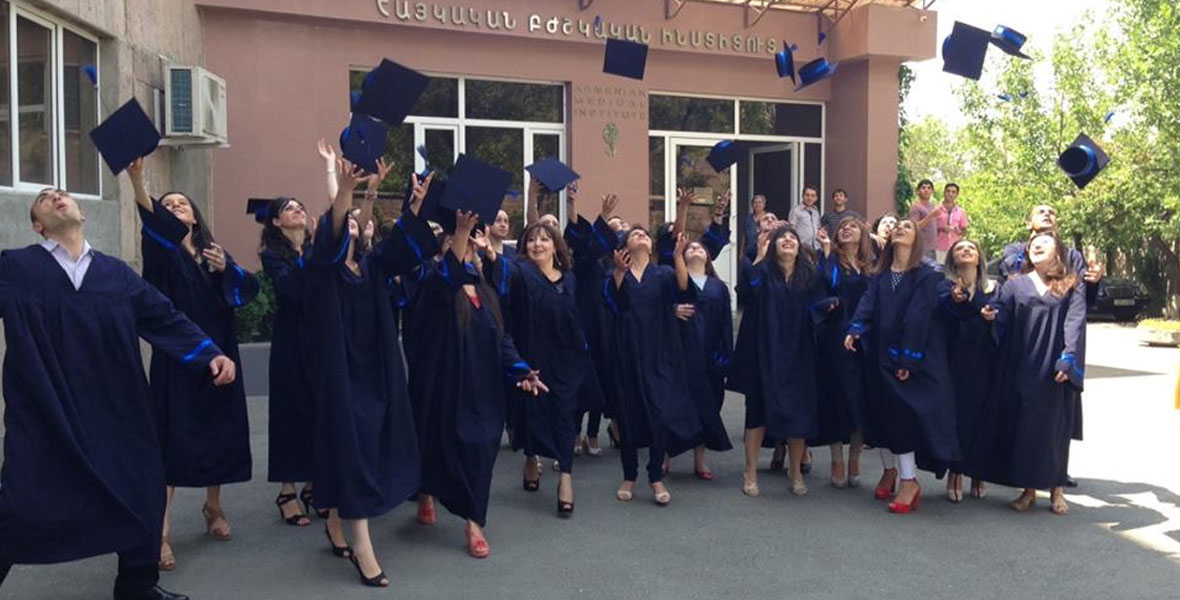
Armenia is currently one of the most popular destinations to study medicine and dentistry abroad in English. Affordability and high-quality medical education are the main factors that distinguish Armenia from the rest of Europe. Additionally, the country has a welcoming atmosphere with very friendly people and an interesting culture that makes the student experience enjoyable and memorable.
Armenia is situated at a cultural, religious, and historical intersection and located at the crossroads between Europe and Asia, in the southern Transcaucasus.
Armenia has borders with Turkey to the west and south, Georgia to the north, with Azerbaijan to the east and southwest, and with Iran to the south.
Tourists find over 4,000 historical monuments throughout Armenia, covering various periods of the country's history from the early to medieval Christian era, and from prehistoric to Hellenistic times.
Armenia consists of 97% of the population today which are Christians and the remaining small percentage is made up of different ethnic minorities such as the Yazidis, Ukranians, Kurds, Russians, and more. Armenia consists of one of the most beautiful churches in the world.
The climate of Armenia is dry and continental. Summer, in Armenia, is long and hot, with the average June and August temperature in the plain being 25° C. Winter is generally not cold where the average January temperature in the plain and foothills is about −5° C, whereas in the mountains it drops to −12° C.
According to 2011 census, Armenia’s population is 28, 71, 509.
The largest city of Armenia is ‘Yerevan’ which is also the capital city of Armenia.
The country Armenia has an area of 29,743 km² and hence Armenia is just slightly smaller than Belgium.